2013年9月14日 星期六

9 Lilies

Iliad 3.150-153
百合花一般的聲音?
γήραϊ δὴ πολέμοιο πεπαυμένοι, ἀλλ᾽ ἀγορηταὶ
ἐσθλοί, τεττίγεσσιν ἐοικότες οἵ τε καθ᾽ ὕλην
δενδρέῳ ἐφεζόμενοι ὄπα λειριόεσσαν ἱεῖσι:
τοῖοι ἄρα Τρώων ἡγήτορες ἧντ᾽ ἐπὶ πύργῳ.

Because of old age they had now ceased from battle,
but they were good speakers, like cicadas that in a forest
sit on a tree and pour out their lily-like voice;
such were the leaders of the leaders of the Trojans who were sitting on the wall.

l  百合花,除了Lilium candidum,還有許多種,Lilium是一屬,其它別名有:強蜀、番韭、山丹、倒仙、重邁、中庭、摩羅、重箱、中逢花、百合蒜、大師傅蒜、蒜腦薯等。多年生草本球根植物,參考維基百科中文版: 「全球已發現有至少120個品種,其中55種產於中國。近年更有不少經過人工雜交而產生的新品種,如亞洲百合、香水百合、火百合等。百合花為整齊花,輻射對稱,花被片6枚,2輪,每輪3片,雄蕊群6枚,2輪排列,每輪3枚;雌蕊群由3個心皮組成,合生,子房3室,上位;常有香味,有白、黃、橙、粉、紅、紫、綠等色,部分還有斑點、條紋或鑲邊。」

1. 柱頭 2. 花柱 3. 花藥 4. 花絲 5. 花瓣

l  加爾亞頓百合(Lilium chalcedonicum),原生地是希臘與阿爾巴尼亞(Albania),高度可達150分,花向外打折,下垂,亮麗的紅色或橘色,沒有斑點。


l  Lilium albanicum

l  歐洲百合,又名頭巾百合,Lilium martagon


l  宜昌百合,Lilium leucanthum


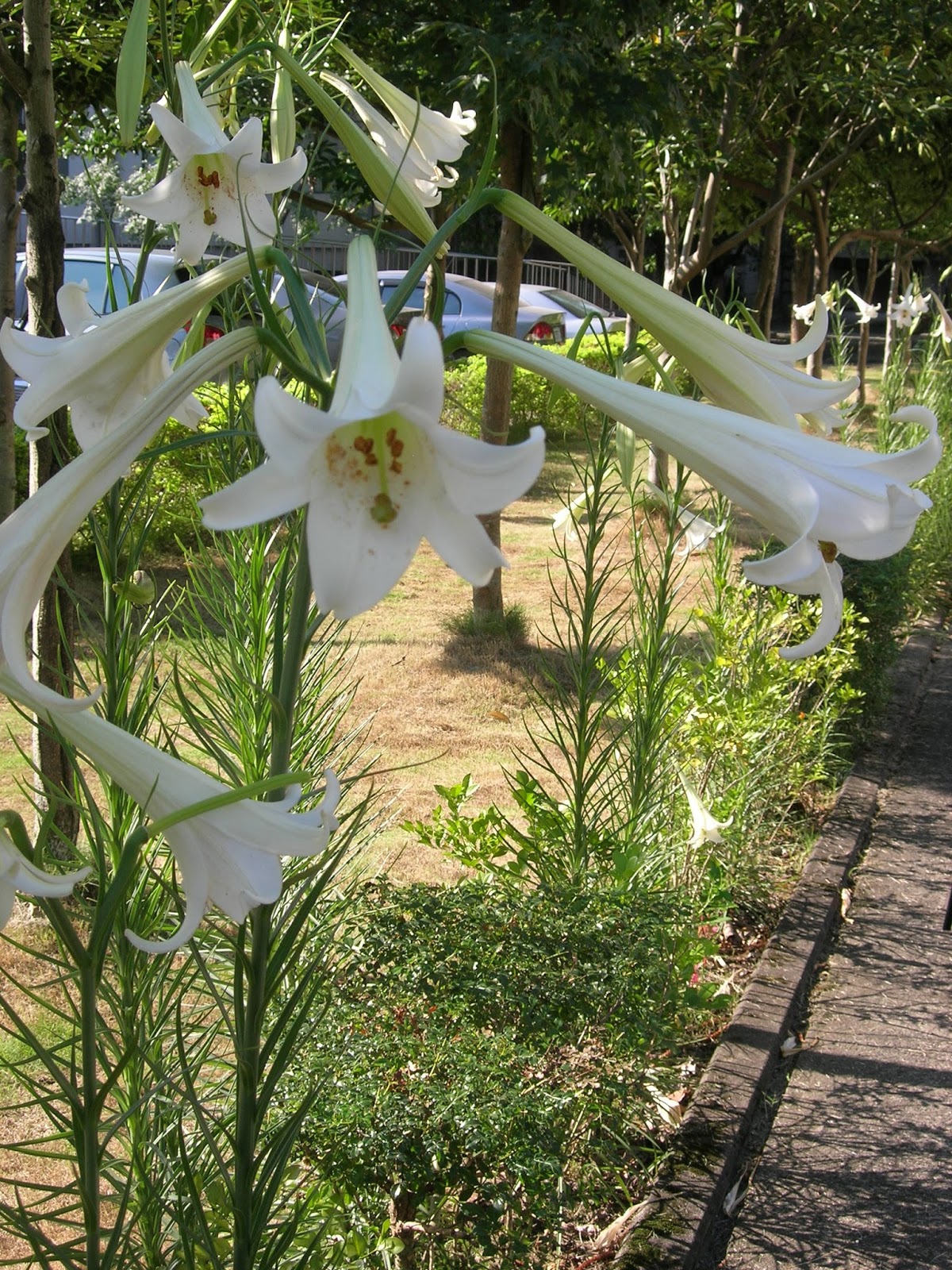
l  台灣百合,Lilium formosanum,我收集一些照片:


l  鹿子百合
還沒親眼看過鹿子百合,近來Facebook好友友介紹,一睹「東亞最美麗的百合花」的照片,也網路世界的奇蹟與美好
鹿子百合(學名:Lilium speciosum),又名美麗百合、藥百合、艷紅百合、洋紅百合、七夕百合、土用百合,為百合科百合屬的植物,種加詞speciosum意為「美麗的」,分布於日本的九州和四國、台灣島和中國大陸南部[1],由於其花朵布滿艷麗的斑點,猶如鹿紋而得名。台灣分布有布滿紅艷斑點的變種艷紅鹿子百合(Lilium speciousm var. gloriosoides),是台灣的特有種,也是台灣國立自然科學博物館的館花,被譽為「東亞最美麗的百合花」。鱗莖有滋養、強壯身體、利尿、止咳、解熱、消炎的功能。鹿子百合在日本的花語是莊嚴、慈悲深情。


2013年9月9日 星期一

8 Madonna lily

Madonna lily, 
Lilium candidum 
聖母百合


Iliad 3.150-153
百合花一般的聲音?
γήραϊ δὴ πολέμοιο πεπαυμένοι, ἀλλ᾽ ἀγορηταὶ
ἐσθλοί, τεττίγεσσιν ἐοικότες οἵ τε καθ᾽ ὕλην
δενδρέῳ ἐφεζόμενοι ὄπα λειριόεσσαν ἱεῖσι:
τοῖοι ἄρα Τρώων ἡγήτορες ἧντ᾽ ἐπὶ πύργῳ.

Because of old age they had now ceased from battle,
but they were good speakers, like cicadas that in a forest
sit on a tree and pour out their lily-like voice;
such were the leaders of the leaders of the Trojans who were sitting on the wall.

l  一群退役老人,像森林裡的一群蟬,坐在城牆上,沒力氣打仗了,到時各各中氣十足,說話鏗鏘有力,聲音如百合花,這究竟是怎樣的聲音呢? Hesiod曾提到百合花之聲音,謬思女神之聲。或許這裡還意味著老人家智慧之語。

l  λειριόεις like a lily 像百合花。
like a lily, but in Hom. only metaph., χρόα λειριόεντα lily skin, Il.13.830; of the cicadae, ὄπα λειριόεσσαν their delicate voice, 3.152; of the Muses' voice, Hes.Th.41; “Ἑσπερίδες” Q.S.2.418.

l  百合花,完美的對稱,和諧,象徵純潔與無邪。
l  荷馬史詩中形容Ajax的皮膚像百合花細緻。
l  下圖是克里特島Amnissos發現的壁畫 (1600 BCE),白色百合花是主題,更多資訊請參考: http://ancientlights.org/CalendarHouse/ch5.html


l  下圖是在Thera的壁畫,火山島岩石上開著一叢叢的百合花,紅色花可能因為與背景顏色對照,基本上花依照白色百合花或是聖母百合畫出。不過,另有一說是,畫中的花可能是很像百合花的「沙百合水仙」sea-daffodil (Pancratium maritimum)


下面圖片是「沙百合水仙」sea-daffodil (Pancratium maritimum)


l  Pausanias (9.14.7) 提到在Chaeronea (in Boeotia)這地方,好像有一個製藥廠(a kind of pharmaceutical factory),人們用百合花、玫瑰與水仙花做成止痛的藥膏。
l  自邁錫尼文明與米諾文明,常常可見百合花的主題。根據Baumann下面的封印源自邁錫尼文化,但是網頁說明標示為克里特的封印。但是Baumann一直強調,百合花是克里特文化最主要的美學主題之一。此外,兩位婦女獻給女神的花,在Baumann的書是寫著百合(lilies),網頁的說明是番紅花(crocuses)
(參考Bauman, 45)
Goddess Seals of ancient Crete: Goddess with poppies seated under fruiting tree and surrounded by votaries offering crocuses. Two serpents float past the sun and moon in the sky, beside a "Shield Goddess." A double axe takes center position, and beneath it is a small female figure with a crocus who appears to be standing on the mountain symbol, like a goddess in other seal art.


l  λείριον Madonna lily, Lilium candidum 聖母百合


l  下面這幅文藝復興時期作品《報喜》(Annunciation, by Paolo de Matteis, 1712),大天使加百列手持聖母百合,將獻給聖母馬利亞。


l  有些學者認為,聖母百合非希臘本土的原生植物,但是1916年之後陸續發現希臘各地有野生的聖母百合。

2013年9月6日 星期五

7 Parsley

Parsley or Celery
σέλινον
Apium graveolens
西洋芹

Achilles的馬吃甚麼草? 羅念生與王煥生的翻譯「他們的馬在車旁吃沼澤裡的苜蓿和芫荽」
苜蓿面已討論,那芫荽又是甚麼?
1. 荷馬史詩出現頻率不高,此處還加上一個形容詞修飾: Marsh-reared,表示這芹菜是野生的。另一處是Odyssey 5.72,長在Calypso的洞穴外頭。
2. 和台灣常說的芫荽不太一樣,而是旱芹,或是西洋芹。以下是維基百科的說明:「又稱芹菜,富菜,藥芹,是傘形科芹屬的植物,分布在歐洲、美洲、亞洲、非洲等地。在中國烹飪中是一種常見的蔬菜,在義大利菜中也常用作爆香料。芹菜可食用部分主要為葉柄;葉雖然也可以食用,但因略帶苦味,少有人吃。其一種類 A. graveolens var. rapaceum 於西方國家栽種,根可食用Celeriac 現今普見為改良變種 A. graveolens var. dulce 葉、莖、根、果實全可食用。種子可取油及製香辛料。


3. 古希臘文獻多處提到σέλινον,例如,Theophrastus列出幾則說明: 需兩年長成(1.2.2);單一根系,但有旁生(root single, but with large side-growth) (1.6.6);有些是常綠 (evergreen) (1.9.4);長葉子時間(1.10.7);汁液的味道(taste of sap) (1.12.2)effect of trampling and rolling in seed (2.4.3)等等,可見希臘古典時期就已經有相當多的知識。


Common name: Celery
Latin name: Apium graveolens
Other names: Ancient Greek: Selinon, Smallage, Garden Celery, Wild Celery
Family: Apiaceae
Natural habitat: It originates from/in mediteranean area, but it also grows in salty soils of North and South America, Europe, and Africa.
Description: Biennial herbaceous plant, grows to 1m tall. It has a fleshy, rounded root and a furrowed, branched stem. The leaves are pinnate to bipinnate, dark green and shiny with rhombic, coarsely toothed leaflets 3-6 cm long and 2-4 cm broad. The flowers are creamy to grey white, 2-3 mm in diameter, appearing from July to November. The seeds are broad and egg-shaped, 1.5 to 2 mm long and wide.
Compounds: Source of potassium, folic acid, phosphorus, calcium, carbohydrates, protein, dietary fiber, vitamin A, vitamin B-complex, vitamin C and vitamin E.
Parts used:  Root, leaves and dried ripe fruits
Medicinal use: The juice extracted from the petioles can be used for edema, rheumatic tendencies, gout, flatulence, chronic pulmonary catarrh, tendencies toward overweight and lack of appetite. It is a strong diuretic, and is used as a urinary antiseptic, mainly because of the volatile oil apiol. Still, Celery shouldn’t t be used when a person suffers from acute kidney problems (moderate use is permissible only when kidney problems are chronic). Celery can be helpful in treating skin problems, when it is used raw, or prepared as tea. Celery seed decoction is used for bronchitis, rheumatism, and as a sedative. Seeds are also used as a blood purifier, and are very helpful in treting arthritis. Oil extracted from the root can restore sexual potency affected by illness.
Safety: Avoid the use of essential oil in bright sunshine. Substance called bergapten increases photosensitivity, so direct sun exposure is not advisable. Also, Celery is known to provoke serious allergic reactions, and the allergen cannot be destroyed at cooking temperatures.


芫荽

台中后里區菜圃 

張琦雯 拍攝


主題: Calypso的島上植物大觀
經過雅典娜的告發與建議,宙斯決定派出Hermes去找Calypso,要她馬上放人。Hermes的別名是Ἀργειφόντης (slayer of Argus),這裡描述聽到命令後,Hermes穿上搭那雙奇妙的金鞋,帶著他的手杖,立即飛奔到仙女Calypso居住的島,飛行過Pieria,有如海上翻飛的鷗鳥(λάρος sea-mew, gull)
   Hermes的角度,我們觀賞到Calypso仙女的美髮,聽到她的歌聲,還有她優雅地織布,欣賞島上仙境,有山有水,有樹有鳥,還有各種花香鳥語。

Πιερίην δ᾽ ἐπιβὰς ἐξ αἰθέρος ἔμπεσε πόντῳ:
σεύατ᾽ ἔπειτ᾽ ἐπὶ κῦμα λάρῳ ὄρνιθι ἐοικώς,
ὅς τε κατὰ δεινοὺς κόλπους ἁλὸς ἀτρυγέτοιο
ἰχθῦς ἀγρώσσων πυκινὰ πτερὰ δεύεται ἅλμῃ:
τῷ ἴκελος πολέεσσιν ὀχήσατο κύμασιν Ἑρμῆς.
ἀλλ᾽ ὅτε δὴ τὴν νῆσον ἀφίκετο τηλόθ᾽ ἐοῦσαν,
ἔνθ᾽ ἐκ πόντου βὰς ἰοειδέος ἤπειρόνδε
ἤιεν, ὄφρα μέγα σπέος ἵκετο, τῷ ἔνι νύμφη
ναῖεν ἐυπλόκαμος: τὴν δ᾽ ἔνδοθι τέτμεν ἐοῦσαν.
πῦρ μὲν ἐπ᾽ ἐσχαρόφιν μέγα καίετο, τηλόσε δ᾽ ὀδμὴ
κέδρου τ᾽ εὐκεάτοιο θύου τ᾽ ἀνὰ νῆσον ὀδώδει
δαιομένων: ἡ δ᾽ ἔνδον ἀοιδιάουσ᾽ ὀπὶ καλῇ
ἱστὸν ἐποιχομένη χρυσείῃ κερκίδ᾽ ὕφαινεν.
ὕλη δὲ σπέος ἀμφὶ πεφύκει τηλεθόωσα,
κλήθρη τ᾽ αἴγειρός τε καὶ εὐώδης κυπάρισσος.
ἔνθα δέ τ᾽ ὄρνιθες τανυσίπτεροι εὐνάζοντο,
σκῶπές τ᾽ ἴρηκές τε τανύγλωσσοί τε κορῶναι
εἰνάλιαι, τῇσίν τε θαλάσσια ἔργα μέμηλεν.
ἡ δ᾽ αὐτοῦ τετάνυστο περὶ σπείους γλαφυροῖο
ἡμερὶς ἡβώωσα, τεθήλει δὲ σταφυλῇσι.
κρῆναι δ᾽ ἑξείης πίσυρες ῥέον ὕδατι λευκῷ,
πλησίαι ἀλλήλων τετραμμέναι ἄλλυδις ἄλλη.
ἀμφὶ δὲ λειμῶνες μαλακοὶ ἴου ἠδὲ σελίνου
θήλεον. ἔνθα κ᾽ ἔπειτα καὶ ἀθάνατός περ ἐπελθὼν
θηήσαιτο ἰδὼν καὶ τερφθείη φρεσὶν ᾗσιν.
ἔνθα στὰς θηεῖτο διάκτορος ἀργεϊφόντης.
(Odyssey 5. 55-75)

With this in hand, the mighty killer of Argus
flew off—speeding high above Pieria,
then leaping from the upper sky down to the sea.    
Across the waves he raced, just like a cormorant,
which hunts for fish down in the perilous gulfs
of the restless sea, soaking his thick plumage
in the brine—that how Hermes rode the crowded waves.
But when he reached the distant island, he rose up,  
out of the violet sea, and moved on shore,
until he reached the massive cave, where Calypso,
the fair-haired nymph, had her home. He found her there,
a huge fire blazing in her hearth—from far away
the smell of split cedar and burning sandal wood 
spread across the island. With her lovely voice
Calypso sang inside the cave, as she moved
back and forth before her loom—she was weaving
with a golden shuttle. All around her cave
trees were in bloom, alder and sweet-smelling cypress,   
and poplar, too, with long-winged birds nesting there—
owls, hawks, and chattering sea crows, who spend their time
out on the water. A garden vine, fully ripe
and rich with grapes, trailed through the hollow cave.
From four fountains, close to each other in a row,  
clear water flowed in various directions,
and all around soft meadows spread out in full bloom
with violets and parsley. Even a god,
who lives forever, coming there, would be amazed
to see it, and his heart would fill with pleasure. 

除了比較籠統的說法葡萄藤蔓和草地,這段提到的植物:
κέδρος cedar-tree, Juniperus Oxycedrus 側柏
θύον thyine-wood, citron-wood, Callitris quadrivalvis 雪松
κλήθρα alder, Alnus glutinosa 赤楊
αἴγειρος black poplar, Populus nigra黑楊
κυπάρισσος cypress, Cupressus sempervirens 柏樹
ἴον violet, Viola odorata香堇菜
σέλινον celery, Apium graveolens  野芹